
22.July 2026
Products of tomorrows require more than good intentions
Why customer usability, portfolio strategy, and cross-functional collaboration all matter in sustainable decisions.
How to incorporate our CSR commitments into our products? At Hager, the answer goes far beyond materials or certifications alone. It is about how environmental considerations are embedded into decisions across the entire value chain — from product strategy and development to customer usability and long-term portfolio management.
Making sustainability usable for customers
For Amina Osmanovic, Product Marketing Leader in Marketing & Sales, environmental performance only creates value when customers can actually work with it.
Her role as an internal Blue Planet Champion (our internal environmental sustainability community) focuses on translating complex sustainability requirements into practical, usable solutions for daily business. Instead of overwhelming customers with fragmented data and documentation, the objective is to simplify complexity and create clarity. That means turning topics such as CO₂ information, certifications, or compliance requirements into reliable and accessible guidance for planners, installers, and partners.
“Customers are not looking for more storytelling. They are looking for clear and directly usable proof.”
Amina Osmanovic, Product Marketing Leader
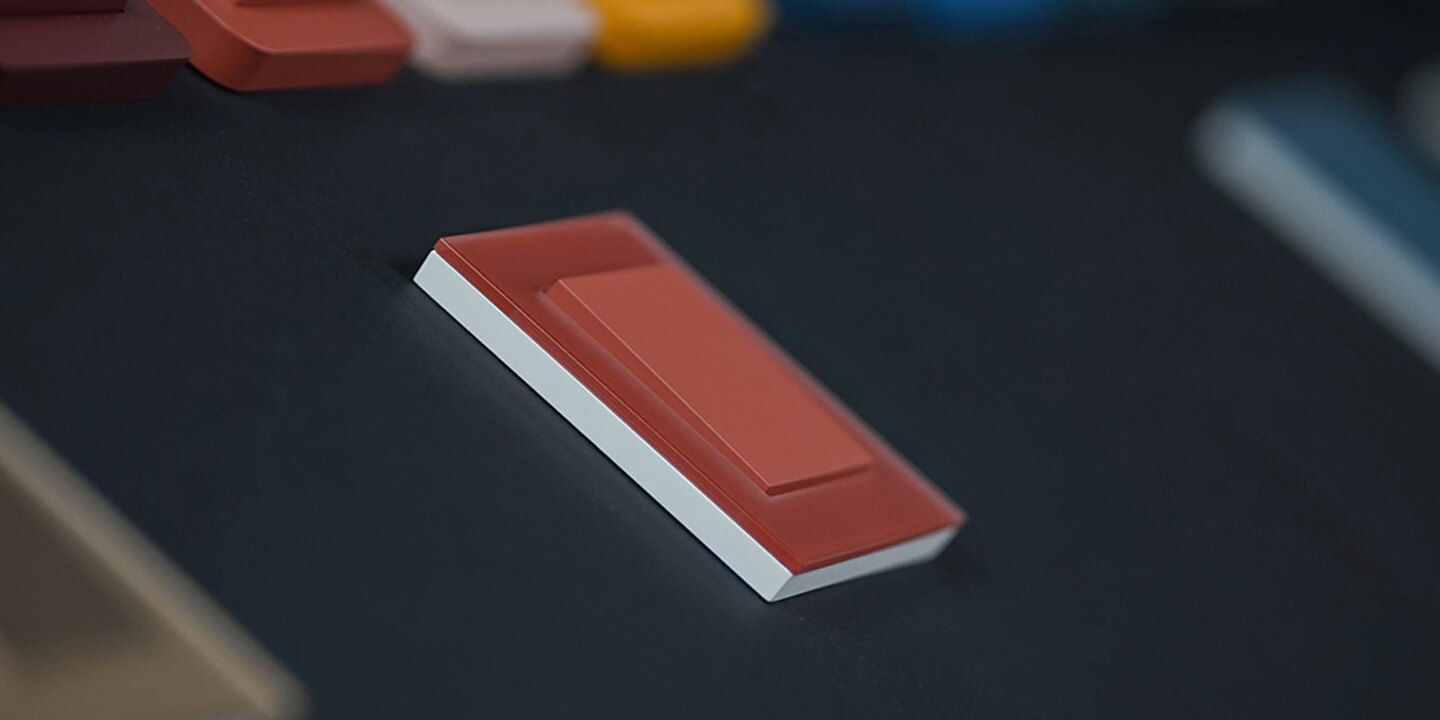
This perspective also influences how environmental considerations are built into new products. The "One Switch System", which was introduced at Light + Building 2026, is an example of this. Parts of the range use 50% post-consumer recycled plastic and are Cradle to Cradle Certified® Bronze Version 4.1 — but the real challenge was ensuring that these advances did not create additional complexity for customers.
No changes in installation. No compromise on quality. No separate “green niche product”. Instead, sustainability became part of a standard offering.
Embedding sustainability into portfolio decisions
Behind every future product stands a series of strategic choices — from portfolio priorities and development targets to material choices and long-term investments.
At Hager, these decisions are increasingly guided by dedicated product portfolio roadmaps that translate decarbonization ambitions into concrete development projects. According to Volker Busch, System & Solution Director in System and Product Management, the biggest levers differ depending on the portfolio: alternative materials, lower energy consumption during product use, or optimized design concepts.
But one principle remains constant: environmental impact cannot be treated as a parallel initiative.
“Sustainability and economic growth are not contradictory — they are closely connected.”
Volker Busch, System & Solution Director
This is why environmental criteria are integrated directly into Hager’s “Create-the-Offer” process — from early specification phases to final market launch. Product Management, Engineering, Operations, Sales, and Marketing all contribute to the same objective. Cross-functional alignment plays a decisive role because sustainability decisions affect the entire value chain: sourcing, production, customer use, and long-term business performance.
Beyond the product itself
What connects both perspectives is the understanding that products are never created by one function alone. It requires collective energy for our different teams in the different functions, but it needs also support from suppliers and partners: they require technical expertise, customer understanding, operational coordination, and the willingness to make long-term decisions across organizational boundaries. In practice, this often means solving complexity rather than adding to it.
And perhaps that is the most important lesson behind Hager’s sustainability roadmap: meaningful progress does not come from isolated claims, but from embedding responsibility into the way products are designed, managed, and brought to market every day.