Hager Energy
Combining expertise for low-carbon living: Our business unit develops products for alternative energy sources, electromobility and smart energy management.
Hager Energy: Poised to sit at the heart of the energy transition
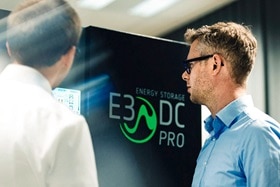
Combining E3/DC and our Hager energy management systems under the roof of our new Hager Energy business unit means we’re ready to take on one of the greatest challenges of the energy transition: storage and distribution of renewables.
Smart energy management
Storing renewable power when it’s being produced and keeping it for when it’s needed. This is possible with smart and revolutionary energy management. At Hager Group, we offer a wide range of energy management systems. With our new Hager Energy Business Unit, we intend to position ourselves at the heart of an energy transition which works.
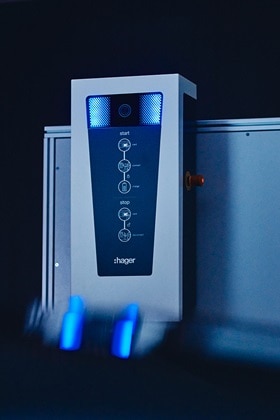
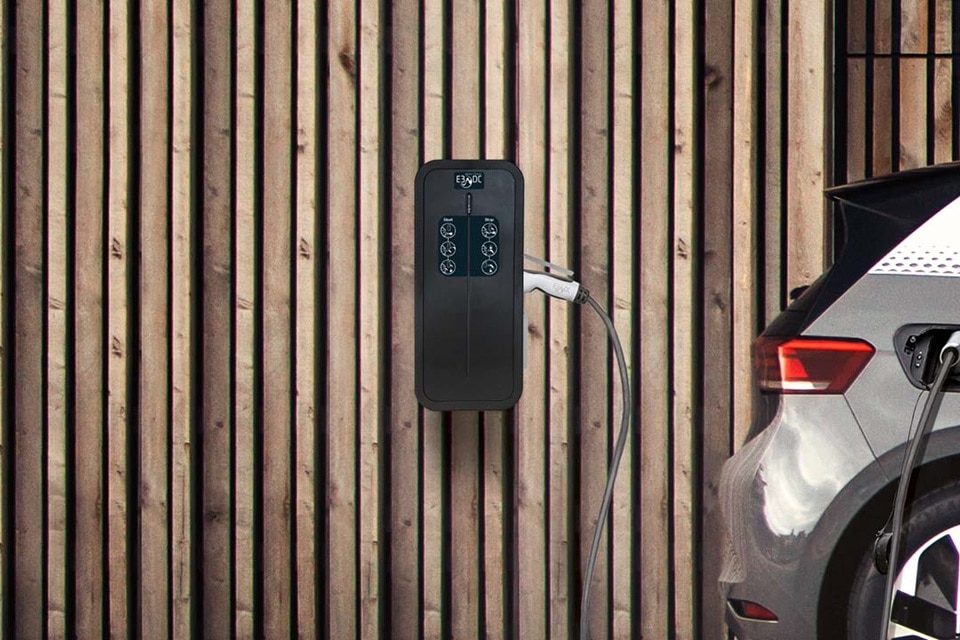
Our broad energy management offer such as Electrical Vehicle Charging Stations (EVCS), energy storage and energy management controlling includes all the components necessary to make the transition away from fossils to renewables more than a distant vision.

Towards a decentralised grid
The way power is produced has been changing for a while. In Germany alone, we have shifted from about 70 central power stations feeding the grid to over 2m individual prosumers i.e. consumers which produce their own electricity. Solar panels on roofs generate electricity which can be used to run the house and to fuel the EV.
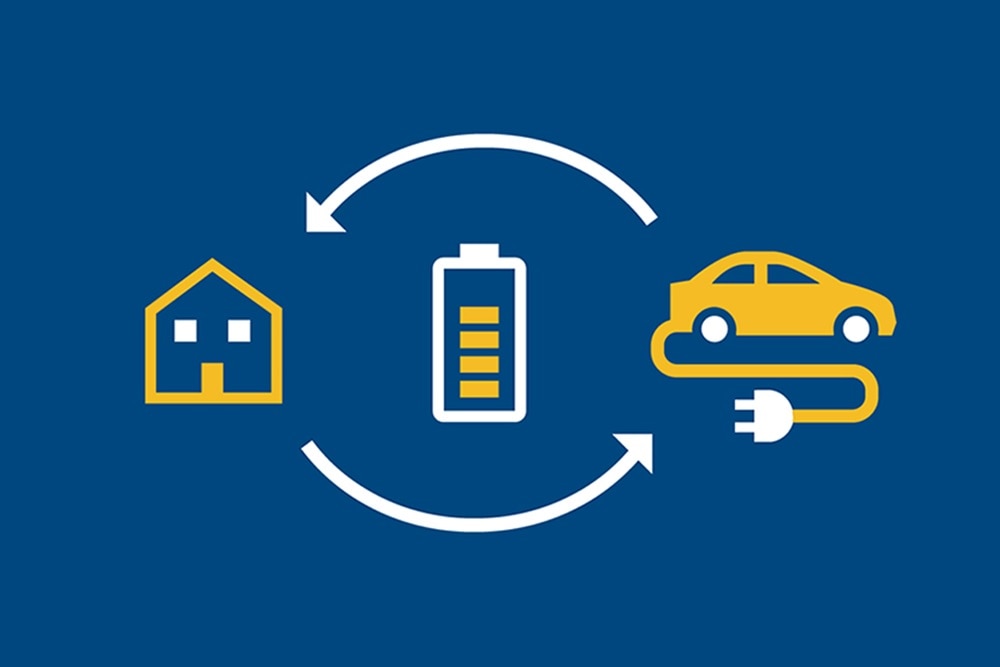
Combining the storage possibilities contained both in the house and the car is a breakthrough technology known as bidirectional charging. Since a vehicle battery can store about as much energy as an average household consumes in a week, bidirectional charging offers a massive opportunity for everyone who lives in a building and drives a car. Which is just about every one of us.
Vehicle to Home (V2H)for greater self-sufficiency and sustainability
Learn how vehicle-to-home technology or “bidirectional charging” is enabling homes to get off the grid and become more self-sufficient with renewable energies.
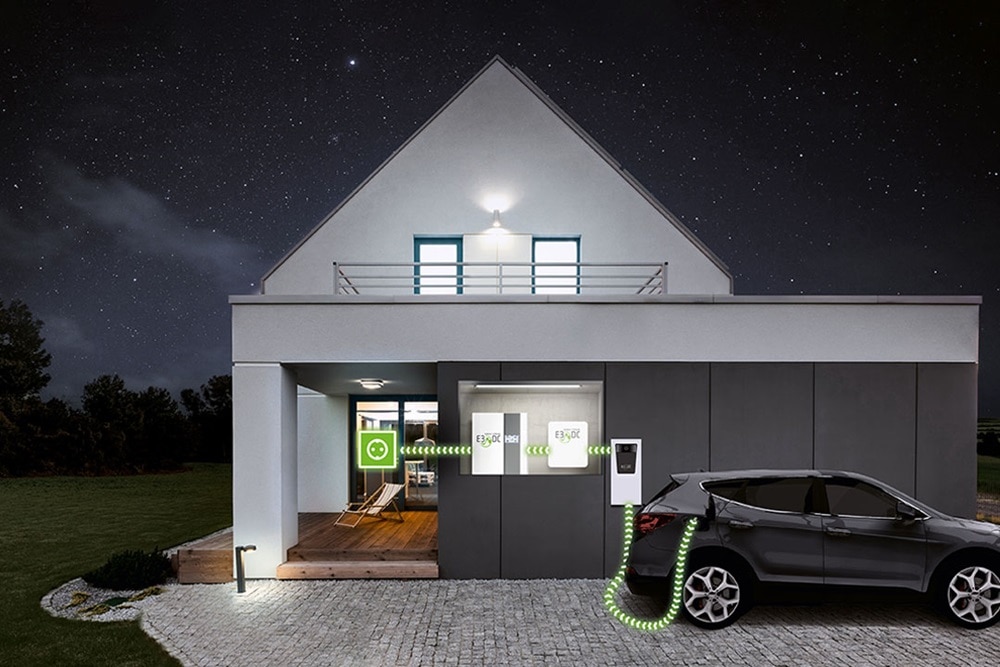
Hager Group is leading the way in bidirectional charging in Europe through its research activities. One way to use bidirectional charging is Vehicle-to-home (V2H). This technology enables electric vehicles (EVs) to charge, but also to return energy back to the house, essentially turning vehicles into mobile batteries. This will have a major impact on the energy transition. It will help us make better use of renewable energy by giving us more freedom to store and use it efficiently. This means we can take full advantage of renewable energy and its benefits. It will help stabilize the electricity grid, increase energy efficiency and reduce carbon emissions.
V2H is still in the early stages of adoption, but it has already been used successfully in Japan, where bidirectional charging can be used to power homes during a blackout.
Hager Group's research in this field is dedicated to advancing vehicle-to-home technology as a basis for future charging infrastructure solutions.
V2H is still in the early stages of adoption, but it has already been used successfully in Japan, where bidirectional charging can be used to power homes during a blackout.
Hager Group's research in this field is dedicated to advancing vehicle-to-home technology as a basis for future charging infrastructure solutions.
And how does this all work?
Granted: There's a lot of technology involved here. That’s why, together with our colleagues from Audi, we have created a super easy-to-understand video. Watch it and you’ll get it.
03:13
Cutting edge technology
All of this depends on highly sophisticated systems talking to each other and our key challenge is to master charging software technology for Hager Group EVCS products worldwide. We are well on our way, having run a successful project with Audi in 2020, using a specially designed e-tron model. We have shown our technology to work and are now scaling our production and sales capabilities.
Going forward, Hager Energy CEO Dr. Andreas Piepenbrink and COO Rémy Becher are confident we’ll be seeing Hager Group as a central player in an energy transition designed to drastically cut greenhouse gas emissions.